
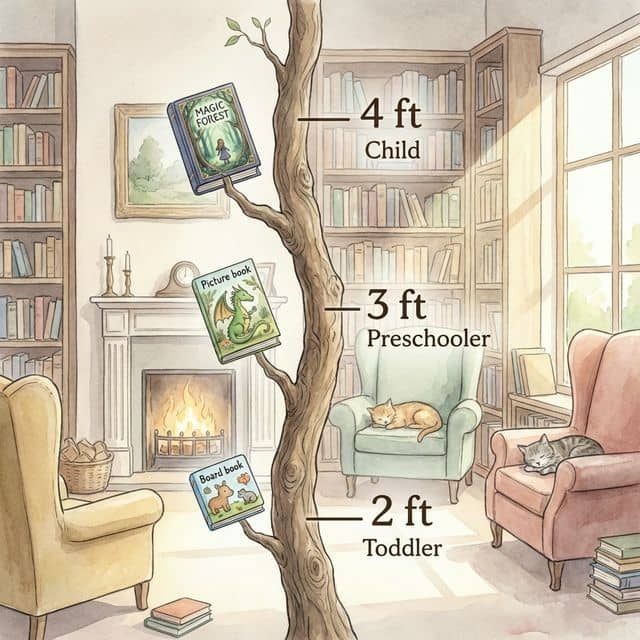
A complete age-by-age guide to choosing the right book for your child's developmental stage — from board books for babies to chapter books for big kids.
The Right Book at the Right Time Changes Everything
Not all books are created equal — and not every book is right for every age. A board book that delights a 1-year-old will bore a 5-year-old. A chapter book that excites a 7-year-old will overwhelm a 3-year-old. Choosing age-appropriate books isn't just about difficulty level — it's about matching your child's cognitive, emotional, and motor development.
Research from the American Academy of Pediatrics shows that children who are read age-appropriate books from infancy score 6 months ahead in language development by age 3. The right book at the right time isn't a nice-to-have — it's a developmental accelerator.
Here's your complete guide to choosing the perfect book for every stage of childhood, from birth through age 10.
Quick-Reference: Age-by-Age Book Guide
Use this table as a quick reference, then read the detailed sections below for expert insights on each stage.
| Age | Stage | Best Book Type | Key Features |
|---|---|---|---|
| 0-1 | Sensory | Board books, cloth books | High contrast, tactile, face photos |
| 2-3 | Recognition | Picture books, personalized books | Simple stories, rhyming, repetition |
| 3-5 | Emotional Explorer | Picture books, therapeutic stories | Emotions, fears, longer narratives |
| 5-7 | Emerging Reader | Early readers, series books | Simple sentences, humor, non-fiction |
| 7-10 | Independent Reader | Chapter books, graphic novels | Complex plots, diverse perspectives |
Ages 0-1: The Sensory Stage
What's Happening Developmentally
Babies are discovering the world through touch, sound, and sight. They can't follow a story yet, but they're absorbing the rhythm of language, the warmth of your voice, and the visual contrast of images. During this stage, a baby's brain forms more than 1 million new neural connections every second — and every word you read aloud contributes to that wiring.
"Reading to infants isn't about comprehension. It's about building the auditory scaffolding for language. Every rhyme, every rhythm, every inflection in your voice is teaching their brain how language works."
— Dr. Perri Klass, pediatrician and NYU Professor of Journalism and Pediatrics
What to Look For
- Board books — durable enough for chewing and dropping
- High-contrast images — black and white or bold primary colors (newborns can only see 8-12 inches away)
- Touch-and-feel textures — sensory engagement that strengthens fine motor skills
- Simple, rhythmic text — one word per page is perfect
- Photos of faces — babies are hardwired to study faces from birth
- Cloth and bath books — for exploration in every environment
Pro tip: At this age, how you read matters more than what you read. Your voice, your warmth, and the physical closeness build neural pathways for language and bonding. A 2019 study in Pediatrics found that babies read to from birth had heard 1.4 million more words by age 4 than peers who weren't read to.
Reading Milestone: Birth to 12 Months
By 6 months, babies should be reaching for books, mouthing them, and vocalizing during reading time. By 12 months, most babies can point at pictures, turn board book pages with help, and may have a favorite book they request by reaching for it.
Ages 2-3: The Recognition Stage
What's Happening Developmentally
Toddlers begin recognizing themselves in mirrors and photos. They start using "I" and "me." Their vocabulary explodes from ~50 words to 1,000+. This is when personalized books become magical — because for the first time, your child can recognize that the hero is them.
A landmark study from the University of Sussex found that children aged 2-3 who were read personalized books showed 38% higher engagement and 25% better story recall compared to standard picture books. This is the self-referential encoding effect in action — the brain processes information about "me" more deeply than information about others.
What to Look For
- Simple stories with a clear beginning, middle, end
- Repetitive phrases — "Brown Bear, Brown Bear" style repetition builds prediction skills
- Familiar scenarios — bedtime, mealtimes, playground, animals
- Rhyming text — supports phonological awareness (the foundation of reading)
- Personalized books — this is the sweet spot for maximum impact on self-concept
- Lift-the-flap books — develops fine motor skills and builds anticipation
Reading Milestone: 24 to 36 Months
By age 2, toddlers can name objects in pictures and fill in words in familiar stories. By 3, most children can retell a simple story in their own words, recognize some letters, and "read" favorite books from memory — a crucial pre-literacy skill called emergent reading.
Ages 3-5: The Emotional Explorer Stage
What's Happening Developmentally
Preschoolers develop Theory of Mind — the ability to understand that other people have different thoughts and feelings. Their imagination peaks, which is why fears also peak at this age. They can follow multi-step plots and begin to identify with characters. This is the golden age of picture books and emotional development.
"Between ages 3 and 5, children undergo a revolution in emotional understanding. Stories are the laboratory where they safely experiment with feelings they don't yet have words for."
— Dr. Marc Brackett, Director of the Yale Center for Emotional Intelligence
What to Look For
- Emotional themes — books about feelings, fears, friendship, and bravery
- Longer narratives — 24-32 pages with clear story arcs
- Interactive elements — "What do you think happens next?" moments
- Therapeutic stories — books that address specific fears or life transitions like new siblings or starting preschool
- Rich vocabulary — don't dumb it down; children absorb sophisticated words in context
- Books about diversity — this is when representation in books starts shaping identity
The Magical Hekaya Sweet Spot: Ages 3-5
Our personalized books for ages 3-5 combine emotional themes, beautiful AI illustrations of your child, and stories designed with child psychology principles. Your child sees themselves conquering fears and discovering new worlds.
Create a Personalized Book →Reading Milestone: 36 to 60 Months
By age 4, children recognize most letters and some sight words. They understand that text flows left to right (in English) and can "read" environmental print like stop signs and cereal boxes. By age 5, many children begin sounding out simple words and can follow a story without pictures — though they still prefer illustrated books.
Ages 5-7: The Emerging Reader Stage
What's Happening Developmentally
Children are learning to decode words. They transition from "being read to" to "reading with" and eventually "reading alone." Their attention span grows, and they begin preferring stories with more complex characters and plots. This stage is where audio storybooks can help reluctant readers build confidence.
The National Reading Panel reports that children who read (or are read to) for 20 minutes per day are exposed to 1.8 million words per year — and this daily habit is the single strongest predictor of academic success across all subjects, not just literacy.
What to Look For
- Early readers — simple sentences, larger font, plenty of illustrations
- Series books — familiar characters across multiple books build reading motivation
- Humor — silly wordplay and jokes drive reading enthusiasm
- Complex emotions — stories about friendship dynamics, fairness, and courage
- Non-fiction — many children at this age develop intense interests (dinosaurs, space, animals)
- Graphic novels — visual storytelling supports comprehension for developing readers
Reading Milestone: 5 to 7 Years
By age 5-6, most children can read simple sentences and are building a sight word vocabulary. By age 7, many children transition to reading independently, though the complexity of what they can read varies widely. The key is maintaining reading as a joyful activity — not a chore. Children who associate reading with pleasure at this age are 4 times more likely to be avid readers as teenagers.
Ages 7-10: The Independent Reader Stage
What's Happening Developmentally
Children are reading independently and developing personal preferences. They can handle chapter books, complex plots, and moral dilemmas. Their identity is solidifying, and they enjoy stories that reflect their expanding world. This is also when screen time often competes with reading time, so choosing engaging books becomes even more critical.
What to Look For
- Chapter books — graduated from picture books to text-forward stories
- Diverse perspectives — exposure to different cultures, experiences, and viewpoints
- Moral complexity — stories that don't have clear-cut "good guys" and "bad guys"
- Child-chosen books — let them pick; ownership drives reading habit formation
- Graphic novels and manga — legitimate reading that builds visual literacy and narrative comprehension
- Books that mirror their experiences — representation matters at every age, but identity-affirming books during this stage shape lifelong self-image
Reading Milestone: 7 to 10 Years
By age 8, most children can read grade-level text fluently and silently. They begin to distinguish between fiction and non-fiction, can summarize what they've read, and start developing critical thinking about stories. By age 10, children who have been consistent readers typically have a vocabulary 2-3 times larger than peers who read infrequently.
Reading Milestones Summary Table
| Age | Milestone | What to Watch For |
|---|---|---|
| 6 months | Reaches for books, vocalizes | Shows interest in being held during reading |
| 12 months | Points at pictures, turns pages | Has a "favorite" book they request |
| 2 years | Names objects in pictures | Fills in words from familiar books |
| 3 years | Retells simple stories | Recognizes some letters, "reads" from memory |
| 4-5 years | Recognizes letters, some sight words | Understands left-to-right text flow |
| 6-7 years | Reads simple sentences independently | Building sight word vocabulary |
| 8-10 years | Reads chapter books fluently | Critical thinking about stories, large vocabulary |
The Golden Rule: Follow Their Interest, Not Just Their Age
Age guides are starting points, not rigid rules. Some 3-year-olds love long, complex stories. Some 6-year-olds still adore simple board books. The most important thing is that your child enjoys reading. A child who loves books will become a lifelong reader — regardless of whether they're reading "at level."
"There is no such thing as a child who hates reading. There are only children who have not found the right book."
— Frank Serafini, author and literacy researcher
Pay attention to:
- What they reach for — this tells you their emotional needs
- What they ask to re-read — repetition means the story resonates (and is building deep comprehension)
- What makes them ask questions — curiosity is the engine of learning
- What makes them laugh — joy and reading should be inseparable
Common Age-Matching Mistakes Parents Make
Even well-intentioned parents sometimes choose books that miss the mark. Here are the most common pitfalls:
- Pushing "advanced" books too early: A child who can decode words above their grade level may not be emotionally ready for the themes. A 4-year-old sounding out first-grade words doesn't need stories about bullying or death.
- Abandoning picture books too soon: Many parents stop reading picture books once their child can read independently. But picture books serve emotional development even for 8-10 year olds.
- Ignoring re-reading: Parents often want to introduce new books constantly. But re-reading favorites builds deep comprehension, confidence, and emotional security. Let them re-read.
- Choosing books based on curriculum, not interest: A child forced to read "educational" books they hate will develop an aversion to reading. Follow their passions — even if that means reading 47 books about trucks.
- Forgetting bedtime as a reading opportunity: The 15 minutes before sleep are prime time for books. The brain consolidates learning during sleep, making bedtime stories especially powerful for memory and emotional processing.
How Personalized Books Fit Every Age
One of the unique advantages of personalized children's storybooks from Magical Hekaya is that the content is calibrated to your child's specific developmental stage. When you create a book, the story complexity, vocabulary, emotional themes, and illustration style all adapt to match your child's age bracket.
- Ages 2-3: Simple recognition stories with their name and face — pure delight and self-concept building
- Ages 3-5: Emotional adventure stories where they conquer specific fears — fear of the dark, first day of school anxiety, and more
- Ages 5-7: More complex narratives with moral themes, designed to be read together or independently
- Ages 7-8+: Stories with nuanced characters and plots that reflect their expanding world
Whether your child needs help with bedtime anxiety, a confidence boost from seeing themselves as a hero, or simply a beautiful story where they're the star — we create books that meet them exactly where they are.
Find the Perfect Book for Your Child's Age
Tell us your child's age and interests, and we'll create a personalized storybook designed specifically for their developmental stage — starring them.
Create Their Personalized Book →