
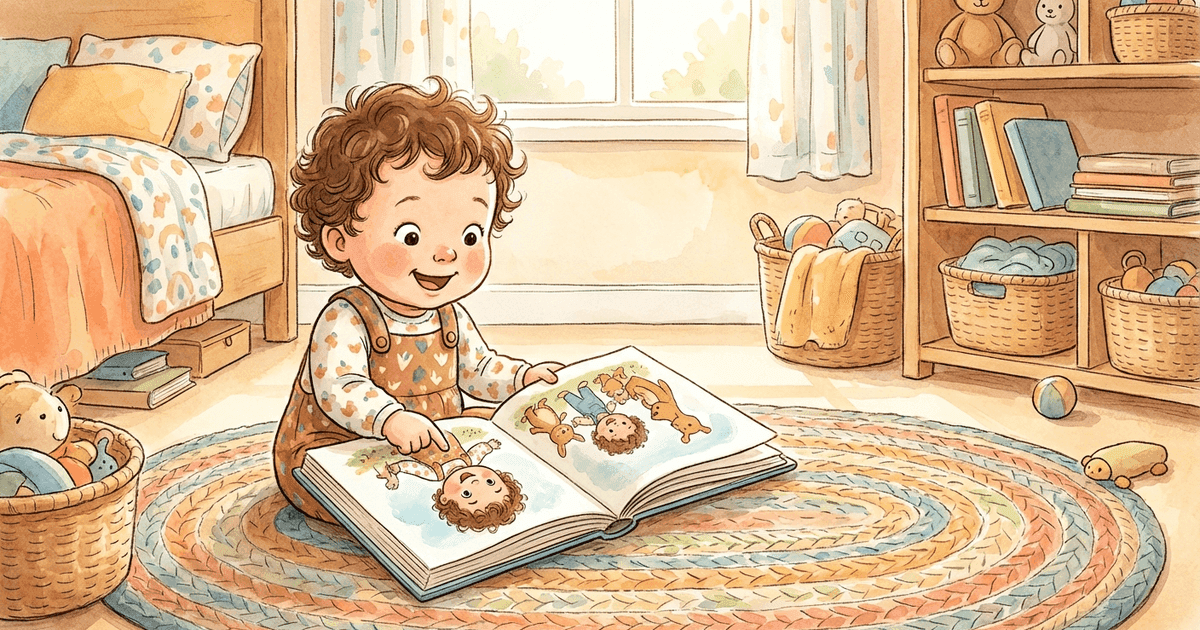
Discover the best personalized book for toddlers aged 1 to 3. Learn what truly engages children at each developmental stage — and why photo-based personalization makes all the difference.
Why Personalized Books Matter More for Toddlers Than Any Other Age Group
There is a window between roughly 12 and 36 months when a child's relationship with books is shaped for life. It happens before they can read a single word. It happens through laps and pointing fingers and "What's that?" asked forty times in a row. During this window, a book is not a reading exercise — it is a sensory experience, a shared ritual, and a mirror in which the child begins to understand themselves and their place in the world.
That is why a personalized book for a toddler is not simply a nice gift. It is a developmentally significant object. When the child on the page looks like your child, when their name is spoken in the audio narration, when the story places them inside a world they recognize — engagement is not optional. It is automatic. Toddlers who might ignore a generic picture book will return again and again to a book that stars themselves.
This guide walks through exactly what makes a personalized storybook work for children ages 1 to 3, what to look for when choosing one, and why some types of personalization matter far more than others at this age.
What Toddlers Actually Need in a Picture Book
Simple, Bold, and Immediately Recognizable
A toddler's visual system is still maturing. Their attention is captured by high-contrast images, large simple shapes, and strong saturated colors. A page packed with intricate details, subtle shading, or small text will lose them before they process a single element. The best personalized storybooks for toddlers keep each page focused on a single scene with one clear focal point — ideally, the child character in the center of something familiar and joyful.
Text should be minimal: two to five words per page is ideal for children under two, and a short sentence or two works well for 2- to 3-year-olds. The words should name, label, and celebrate rather than narrate complex plots. "Luca finds a puppy!" lands far better than a paragraph of story exposition.
Character Recognition Is Everything
Self-recognition — the ability to understand that a face in a mirror or a photograph is your own — develops around 18 months for most children. By age 2, it is solid, and by age 3, children are fascinated by representations of themselves. This makes the quality of the character illustration the single most important factor in a personalized baby book. A child who sees a cartoon avatar vaguely resembling them will engage passably. A child who sees an illustration that actually looks like their own face will stop, stare, point, and light up.
Audio Narration Bridges the Literacy Gap
Toddlers cannot read, but they can listen. Audio narration transforms a personalized picture book from something a parent must sit down and read into something a child can interact with independently. A 2-year-old tapping through a digital storybook while hearing their name spoken on each page is not passively consuming content — they are pairing spoken language with visual images, building the vocabulary connections that will serve them when formal reading begins. For more on how audio supports early literacy, see our guide on audio storybooks and language development.
Create Your Child's Personalized Book
Upload a photo and your child becomes the hero — illustrated AI storybook with audio narration, ready in under 5 minutes.
Start Creating NowAge Breakdown: What Works at Each Toddler Stage
12 to 18 Months: Sensory First, Story Second
At this age, books are physical objects to be explored with hands and mouths before they are stories to be followed. A personalized book for a 1-year-old should prioritize durability and bold, joyful visuals over narrative complexity. The interaction at this stage is almost entirely led by a parent: "Look! Who is that? That is you!" The child may not fully grasp self-recognition yet, but they respond to familiar voices, big bright images, and the warmth of being held while someone reads to them.
What works: labeling books, books with animal sounds, simple cause-and-effect ("push the button, hear the roar"), and anything with a face — especially a face that looks like theirs. Audio narration that gently speaks the child's name on each page creates a soothing familiarity, even before self-recognition is fully established.
18 Months to 2 Years: The Self-Recognition Spark
Between 18 and 24 months, the mirror test clicks. Children begin to understand that the face in the photograph — or in the illustration — is them. This is the moment when photo-based personalization becomes genuinely magical. A toddler who opens a book and points to the main character saying "me!" is experiencing something profound: they are the hero of a story. This is also the age of the vocabulary explosion, when children acquire new words at a rate of four to ten per day. A personalized book that places them in scenes with named objects and animals turbocharges this process.
What works: stories where the child character discovers or meets something on each page, simple naming books with animals or colors, and books that include family members by name. Keep text short — one sentence per page maximum. Audio narration is particularly powerful here because it consistently models correct pronunciation during the language-acquisition peak.
2 to 3 Years: Simple Adventure and Emotional Connection
By age 2 to 3, toddlers are ready for a rudimentary story arc: there is a beginning, something happens, and it resolves happily. They can follow a simple sequence of events and predict what comes next, especially if the story uses repetitive structure ("First, Ella found a duck. Then, Ella found a frog. Then, Ella found a bear!"). At this stage, a personalized storybook can start introducing light emotional themes — courage, friendship, bedtime — because children this age are beginning to recognize and name their own feelings.
What works: simple adventure stories with a beginning and a satisfying ending, bedtime stories that mirror the child's own routine, books that name and validate emotions, and stories that introduce a new sibling or milestone. The child character should still be the clear hero and focus of every page.
Why Photo-Personalized Beats Avatar-Personalized for Toddlers
There are two main approaches to personalizing the main character in a children's book. The first is an avatar builder: parents choose skin tone, hair color, and eye color from a menu, and the system generates a generic cartoon character. The second is AI photo integration: parents upload an actual photo of their child, and the AI generates illustrations where the character genuinely resembles their child.
For toddlers specifically, the difference is not aesthetic — it is developmental. Toddlers recognize faces, not abstractions. An avatar might be warm and well-illustrated, but a toddler who has never been asked to abstract their own appearance into cartoon form will not reliably see themselves in it. When a child sees an illustration generated from their own photo, the recognition is immediate and visceral. Research on the self-reference effect — the cognitive tendency to remember information better when it relates to oneself — shows that even young children process self-relevant stimuli differently and more deeply. A face that looks like them does not just delight them; it embeds the story more deeply in memory.
For parents choosing between a name-only book, an avatar book, and an AI photo book, this distinction matters most at the toddler stage. Older children can imaginatively engage with an avatar. Toddlers need the real thing. You can explore this further in our comparison of whether personalized books actually work.
How Magical Hekaya Works for Toddlers
Magical Hekaya was built with exactly this kind of developmental context in mind. The process is simple: you upload a clear photo of your toddler, select a story theme appropriate for their age, and the AI generates a full illustrated storybook where your child is the main character — not a name-swapped template, not a cartoon approximation, but a character drawn from their actual face.
The digital book is ready in under 5 minutes and includes audio narration as standard. For toddlers, the themes available include gentle animal adventures, simple discovery stories, and bedtime stories structured around familiar routines. Every theme is designed to use minimal text and large, expressive illustrations — exactly what children under 3 engage with most naturally.
Starting at $4.99 for a digital book with audio, it is also one of the most accessible options on the market — particularly given that toddlers will ask for the same book to be read dozens of times. A physical print bundle is available for parents who want a durable keepsake alongside the digital version. You can create a personalized toddler book here.
Frequently Asked Questions
What age can toddlers start with personalized books?
Toddlers can benefit from personalized books from as early as 12 months. At this age, they are not reading — they are looking, pointing, and listening. A book where they see a face that looks like theirs, hear their name spoken aloud, and can point at bold familiar images is developmentally appropriate and highly engaging. By 18 months, most children have developed enough self-recognition that seeing their own photo in a story creates a genuinely exciting response.
Does my toddler need to be able to read to enjoy a personalized book?
Absolutely not. Toddlers engage with books in a completely pre-literate way — through images, sounds, and shared moments with a caregiver. What matters is bold illustration, familiar objects, short simple language, and audio narration so your child can hear the words even when reading independently. A personalized book works precisely because toddlers connect emotionally with images of themselves long before they can decode a single word.
What story themes work best for toddlers?
The most effective themes for toddlers are rooted in their immediate, concrete world: animals and the sounds they make, daily routines like bath time and meals, colors and shapes, and family members. Adventure or fantasy themes with complex plots are too abstract for under-threes. What a toddler needs is a story that says "here is your world, and here is you in the middle of it." Simple discovery stories — where the child character finds or meets something new on each page — work beautifully.
How does audio narration help toddlers?
Audio narration is one of the most powerful features a toddler book can have. Hearing words spoken aloud alongside images creates the mental connections that drive vocabulary acquisition during the language explosion between 18 months and 3 years. A toddler who taps through a digital storybook and hears "Mia sees a big red apple!" is pairing a spoken word with a visual cue — the same mechanism that makes shared reading so effective, but available any time and as many times as your child demands. Audio narration also means the book is accessible even when a parent cannot sit down to read aloud.