
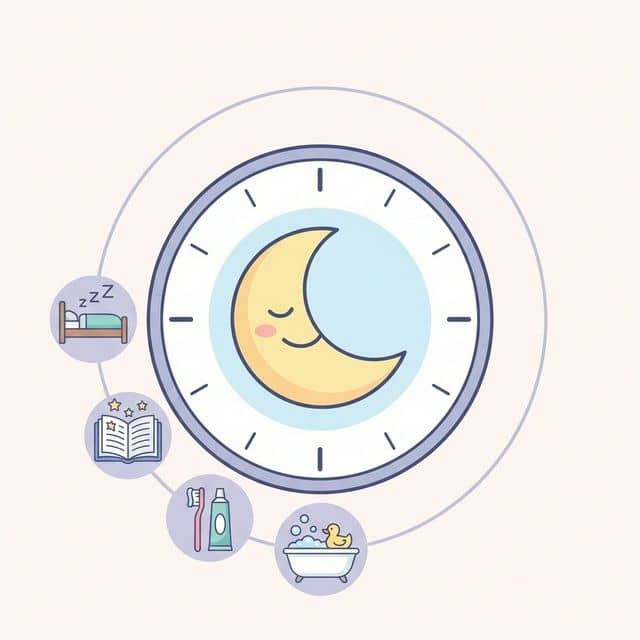
A consistent bedtime routine is the bridge between a busy day and restful sleep. Learn the neuroscience of sleep hygiene and the exact 4-step formula for a peaceful night.
Bedtime battles are exhausting. One minute they are yawning, the next they are sprinting naked down the hallway. But often, the problem isn't the child—it's the transition. Kids need a clear, predictable path from "play mode" to "sleep mode."
The Neuroscience of Routine
Children thrive on predictability. Unpredictability causes the brain to release cortisol (the stress hormone), which keeps the body alert. A predictable routine does the opposite: it signals safety and allows the brain to release melatonin (the sleep hormone). For children who struggle specifically with nighttime fears, incorporating children's books about fear of the dark into the routine can make a significant difference.
Think of a routine as a landing sequence for an airplane. You can't just drop from 30,000 feet to the runway. You need a gradual descent.
Make Bedtime Magical
Create a personalized bedtime story starring your child — with soothing audio narration. Ready in 5 minutes.
Create a Bedtime Story →The 4-Step Formula
Psychologists recommend a routine that lasts 30-45 minutes. Here is a proven structure:
1. Hygiene (The Trigger) - 15 Mins
Bath, pajamas, teeth. This physical change signals the start of the wind-down. A warm bath raises body temperature, and the subsequent drop when getting out mimics the natural body temp drop of sleep.
2. Connection (The Bridge) - 15 Mins
This is the most critical step. This is where reading a story happens. It's 10-15 minutes of undivided attention. No screens, just you and them.
Reading calming books lowers heart rate and syncs the parent and child's breathing. It fills the child's "attention bucket" so they don't seek negative attention (tantrums) to keep you in the room.
3. Gratitude (The Mindset) - 2 Mins
Ask "What was the best part of your day?" This shifts their brain to positive thoughts before sleep, reducing nightmares and anxiety.
4. The Separation - 1 Min
Lights out, white noise on, goodnight kiss. Keep this brief to avoid "curtain calls."
Make Bedtime Magical
Create a personalized bedtime story starring your child — with soothing audio narration. Ready in 5 minutes.
Create a Bedtime Story →Why the Story is the Anchor
The story isn't just entertainment. It's an emotional anchor.
When you read a personalized story where your child is the main character being safe and loved, you are literally speaking security into their subconscious right before they drift off. For children with separation anxiety, a story about the "Invisible String" connecting them to you can be a game-changer.
Consistency is Key
Do the same steps, in the same order, every night. Even on weekends. It builds a neural pathway that says "Bath = Sleep is coming."
Pro Tip: Create a visual chart. Pictures of a toothbrush, a book, and a bed help toddlers who can't read understand what comes next.
Build Your Routine Around Their Story
Make "Story Time" the highlight of the night with a book starring them. It's the parenting hack that makes them want to go to bed.
Personalize Their NightPeaceful Nights Are Possible
You can't force a child to sleep, but you can create the perfect conditions for sleep to happen. A calming routine, anchored by a loving story, is the best gift you can give your tired child (and your tired self).